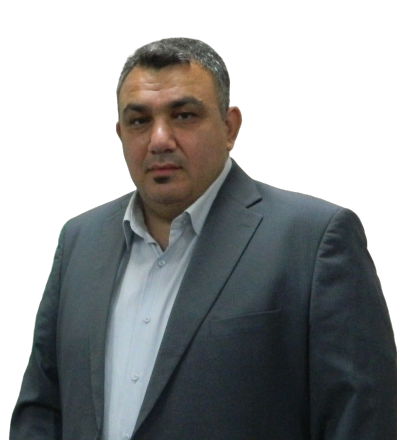

By: Dr. Abdelaziz Tarekji
– Investigative Journalist and Researcher on International Human Rights Violations –
.
A minor passes away and a country grows accustomed to bad news
A few days ago, the Syrian minor Muhannad Muhammad al‑Ahmad (14 years old) died after three months of detention at the Juvenile Prison in al‑Warrar. Official and family narratives conflicted over the cause, and the Internal Security Forces had not issued a transparent, convincing account at the time of writing. Meanwhile, preliminary human‑rights and medical reports reinforced public doubts and ignited a legitimate public outcry. This incident is not isolated; it is another link in a long‑standing pattern of deaths and violations inside places of detention, matched by a systematic obstruction of accountability.
A record of incidents without justice: a brief timeline
– May 2019 – Hassan al‑Dikkeh: The Lebanese detainee Hassan al‑Dikkeh died after having filed documented complaints that he had been tortured. The UN High Commissioner for Human Rights at the time called for a genuine investigation and accountability for those responsible, but the judicial authorities failed to enforce the Anti‑Torture Law (2017) and allowed the same accused security body to investigate itself—an egregious breach of integrity. Result: no effective accountability to date.
– August 2022 – Bashar Abdel‑Saud: The Syrian refugee Bashar Abdel‑Saud died under torture while in the custody of State Security. Although charges were brought against five officers in December 2022, subsequent human‑rights assessments concluded that the military court squandered a pivotal chance for justice—further evidence that the military judiciary is unfit for torture cases.
– August 2025 – Osama al‑Jaour: Human‑rights organizations recorded the death of the Syrian Osama al‑Jaour in Roumieh Prison amid allegations of torture and medical neglect. To date, there are no transparent judicial outcomes that settle the controversy or identify responsibilities.
– October 2025 – Muhannad Muhammad al‑Ahmad (14): The death of a minor after prolonged detention in a juvenile facility; conflicting accounts and the absence of an adequate statement from the security forces, which raises the recurring question: why do deaths inside places of detention continue without swift, independent, and effective investigations?
– Related note – the artist Ziad Itani (2017): His case exposed a pattern of enforced disappearance and torture within State Security, followed by his later exoneration and subsequent attempts to silence him through defamation suits instead of holding the torturers to account. This case is a symbolic indicator of a mechanism that protects the perpetrator rather than the victim.
Lebanon’s legal obligations: clear texts… and crippled implementation
– Convention against Torture (CAT): Lebanon acceded on 5 October 2000, which obliges it to prohibit torture absolutely, conduct prompt and impartial investigations into every allegation, prosecute perpetrators, ensure redress for victims, and disregard any confession extracted under torture.
– Optional Protocol (OPCAT): Lebanon ratified on 22 December 2008 and designated the National Preventive Mechanism against Torture within the National Human Rights Institution under Law 62/2016. However, subsequent official and human‑rights reports documented faltering activation and the mechanism’s limited capacity to carry out regular visits to places of detention.
– Anti‑Torture Law No. 65/2017: An important step on paper, yet marred by core gaps: statutes of limitation ranging from 3 to 10 years starting after the victim’s release; penalties that do not reflect the gravity of the crime; and ambiguity regarding the lack of military‑court jurisdiction over torture cases. International organizations have called for amending the law to remove limitation periods, entrench exclusive civil jurisdiction, and adopt the Istanbul Protocol as the national medico‑legal standard.
Who bears responsibility?
1) The security establishment: The persistence of a police mentality in interrogation rooms and detention basements—normalizing beatings, threats, and humiliation as “routine” tools to extract confessions. Leadership’s duty is not denial but the immediate cessation of such practices, referral of any suspect to the civil judiciary, and suspension pending final judgments.
2) The judiciary: Referring torture cases to the military judiciary inherently undermines justice and breeds impunity. Precedents (e.g., Bashar Abdel‑Saud) prove that the military court is not the competent forum for such crimes and that referral to the civil judiciary is a legal and moral necessity.
3) The executive and parliament: Maintaining statutes of limitation for an international‑law crime like torture violates the essence of Lebanon’s obligations and turns the law into a safety net for perpetrators. Urgent legislation is required to abolish limitation periods, increase penalties proportionate to the crime’s gravity, and codify the lack of military jurisdiction over torture cases.
What must happen now? A binding roadmap
– Immediate referral of every death or injury in custody to an independent civil investigative judge, while enabling victims’ families and their lawyers to access the full forensic‑medical files.
– Temporary suspension and removal from duty of any security officer suspected of torture pending judicial determination, with a strict ban on contact with witnesses or victims.
– Official adoption of the Istanbul Protocol as the national standard for medico‑legal documentation and examinations, and training judges and forensic doctors accordingly.
– Full activation of the National Preventive Mechanism against Torture with guaranteed budgetary and operational independence, enabling unannounced visits to all detention facilities (civilian and military) and periodic public reporting.
– Urgent legislative reform: abolish limitation periods under Law 65/2017, increase penalties proportionate to the gravity of torture, enshrine the exclusive jurisdiction of the civil judiciary, and guarantee the nullity of any confession extracted under torture.
– Public transparency: prompt publication of detailed statements on every death or torture allegation; secrecy does not protect investigations— it protects the torturer.
In conclusion, O Government of Lebanon: No reform without justice
The death of a minor in a juvenile facility, a refugee under interrogation, and a detainee delivered to the coroner as a body bearing the marks of pain… this is neither justice nor security; it is the undermining of the state itself. Lebanon’s international obligations are clear, and domestic law—despite its flaws—provides the initial tools for accountability. A firm political and judicial decision is required: to refer all torture and in‑custody death cases to the civil judiciary, amend the law to close loopholes, activate preventive mechanisms, and hold accountable anyone who ordered, perpetrated, or covered up these crimes. Without that, torture will remain an unofficial policy and justice a mere slogan.