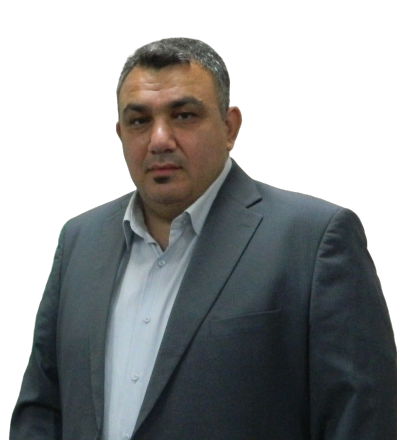

By Dr. Abdelaziz Tarekji
Investigative journalist and researcher on international human rights violations
.
At a pivotal moment in the history of the Middle East, the people of Iran once again write a new chapter in an open confrontation with a regime that retains from the concept of the state nothing but the tools of repression, and from the legitimacy of governance nothing but systematic violence.
What is unfolding today in the streets of Iranian cities is neither an “internal disturbance” nor fleeting socio-economic protests, but the uprising of a people exhausted by four decades of oppression, starvation, and the destruction of human dignity in the name of religion, under the pretext of “resistance,” and beneath a single banner: exporting crises and terrorism abroad while crushing human beings at home.
The contemporary Iranian revolution is not the product of a momentary emotional outburst; it is the result of a legal and moral accumulation of documented crimes against civilians.
In Tehran rules a system that has confiscated the right to life through arbitrary executions, criminalized freedom of expression by labeling it “enmity against God,” and transformed judicial institutions into instruments of political revenge.
From student and labor uprisings, through women’s revolts against compulsory coercion, to the comprehensive popular movement, the response of the authorities has remained unchanged: bullets instead of dialogue, prisons instead of law, and torture instead of justice.
The violations committed against peaceful protesters — extrajudicial killings, mass arrests, enforced disappearances, and sham trials — amount, under international legal standards, to serious crimes and systematic breaches of human rights treaties that obligate states to protect their citizens, not to annihilate them.
What stands out, and is morally condemnable, is an international silence that borders on complicity.
Major international media outlets continue to treat the Iranian revolution as a marginal issue, a postponable news item, or content measured by the scale of interests rather than by the rule of law.
This marginalization is not innocent; it is the extension of a logic that has long granted repressive regimes a form of “de facto immunity,” turning a blind eye to crimes when they intersect with energy calculations, security considerations, or the illusion of “stability.”
Yet what kind of stability is built upon the skulls of protesters? And what sovereignty is preserved when the will of the people is trampled?
From a legal standpoint, the Iranian regime has no justification capable of absolving it of responsibility.
The principle of non-impunity, universal jurisdiction, and the obligations arising from the International Covenants on Civil and Political Rights and on Economic, Social and Cultural Rights place what is happening squarely within the realm of manifest violations.
Repression ceases to be an “internal matter” when it becomes state policy, and killing cannot be framed as “maintaining order” when it is perpetrated against unarmed civilians. The systematic targeting of women, journalists, students, workers, and minorities exposes a structure of power that perceives society as a permanent threat and freedom as an original crime.
Politically and ethically, it is impossible to separate internal repression from the regime’s external role.
The same hand that fires in Tehran, Isfahan, and Mashhad is the one that sponsors networks of violence across the region, fuels conflicts, and invests in chaos as a means of survival.
A regime that wages war against its own people cannot, by any measure, be a factor of stability beyond its borders; this is a truth confirmed by experience and substantiated by facts.
Today, the Iranian revolution redefines legitimacy: a legitimacy drawn from the streets, not from decrees of repression; from the voices of women, not from police batons; from the right to bread and dignity, not from an economy of internal siege.
It is a revolution of law before it is a revolution of politics, and a revolution of dignity before it is a struggle for power.
Any delay in calling it by its true name — a popular revolution against a repressive regime that supports terrorism — constitutes participation in the crime through silence.
History does not absolve bystanders, and law does not recognize neutrality in the face of blood.
What is happening in Iran today is a genuine test of the credibility of the international system, the professionalism of global media, and the courage of the human conscience.
Either the truth is brought to light and the victim is protected, or silence will be recorded as evidence of a new moral collapse. When peoples rise up, they do not return to cages.
In conclusion, the suffering endured by peaceful protesters in Iran cannot be reduced to an “internal affair,” because international law has settled this matter unequivocally.
The International Covenant on Civil and Political Rights explicitly criminalizes arbitrary deprivation of life, protects the right to life, freedom of expression, and peaceful assembly, and obliges states not only to refrain from violations but to take positive measures to protect protesters.
Likewise, the United Nations Basic Principles on the Use of Force and Firearms by Law Enforcement Officials prohibit the use of lethal force except in the most extreme circumstances and regard firing upon unarmed demonstrators as a serious crime.
The systematic killing, arbitrary detention, torture, and sham trials inflicted upon civilians in Iran constitute, under international law, grave violations that may rise to the level of crimes against humanity when carried out on a widespread and organized basis, thereby triggering the principles of non-impunity and international criminal jurisdiction.
Accordingly, the responsibility of the international community is no longer merely moral but legally binding: to protect victims, document crimes, and prosecute those responsible, because silence in the face of repression is not neutrality, but an abandonment of the very essence of international law itself.