By Dr. Abdel Aziz Tarekji
Investigative journalist and researcher on international human rights violations
.
From Combating Hate Speech to Threatening Freedom of Opinion
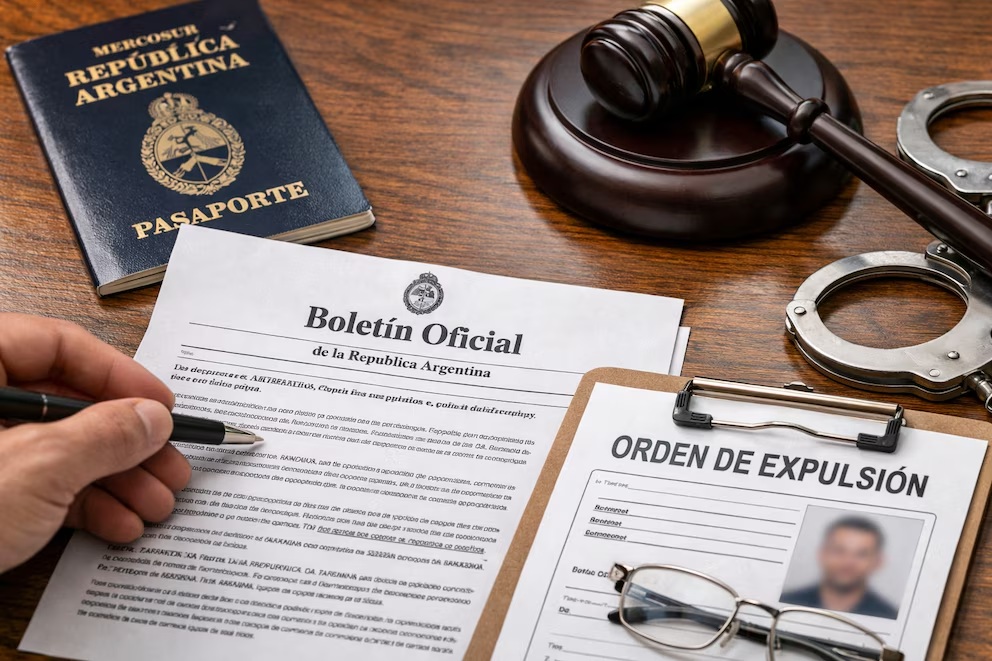
On 29 July 2026, Argentine President Javier Milei issued Decree No. 681/2026, amending Immigration Law No. 25,871, under the declared objective of protecting the Argentine people, national identity and official symbols from messages of hatred and incitement to violence.
Under this decree, a foreign national may be denied entry into the country, or have their residence cancelled if they are already present, and may subsequently be required to leave or be expelled, if the authorities consider that the person directed messages of hatred against Argentines because of their nationality, incited violence against them, or participated in acts described as insulting national symbols. The decree entered into force on the day following its publication in the Official Gazette.
In principle, there is no dispute over the State’s right and duty to confront genuine incitement to violence against its citizens on the basis of their nationality. Calls to attack, harm or discriminate against Argentines are not political criticism and should not be protected under the guise of freedom of expression.
The problem begins, however, when the State moves from punishing specific and clearly identifiable incitement to punishing broad and ambiguous concepts such as “messages of hatred,” “hostility toward Argentina” and “insulting national identity,” particularly when the potential penalty is the loss of residency or permanent expulsion from the country.
.
Does the Decree Protect Argentina or Protect Those in Power?
The decree attempts to present itself as a tool for protecting Argentine society from campaigns of incitement and hatred. A careful legal reading, however, reveals that the problem does not lie in its declared objective, but in the broad scope of interpretation it grants to the Executive Branch.
The State undoubtedly has the right to protect its citizens from racist calls or incitement to attack them, but it does not have the right to protect the Government, the president or the governing political movement from criticism, even when such criticism is harsh, severe or shocking.
This is where the fundamental distinction emerges between protecting the State as a legal entity and protecting the political authority that temporarily administers it. Governments change, parties alternate and presidents come and go, while the State remains.
Therefore, criticising President Javier Milei, criticising his Government or attacking the policies of the Argentine right cannot automatically be considered an attack on the Argentine people or hatred toward Argentina.
If these two concepts are confused, any political opposition could be reclassified as hostility toward the nation, which is one of the most dangerous transformations that any democratic system can undergo.
.
Legal Ambiguity: The Most Dangerous Door Opened by the Decree
The most dangerous aspect of the decree is not the penalties it imposes, but the language it uses. It employs the expression “messages of hatred” without providing a precise legal definition of the term. It also uses the phrase “insulting national symbols” without clearly defining the acts that fall within that description.
This ambiguity grants the Administration wide authority to interpret the text. Would a satirical post about the flag be considered an insult to national symbols? Would an article criticising Argentine nationalism be regarded as a message of hatred? Could a journalistic report discussing governmental abuses be considered harmful to Argentina’s image?
The decree provides no clear answers to these questions. This opens the door to differing interpretations from one official to another and from one Government to another, making the fate of a foreign national dependent more on an administrative assessment than on a clearly defined legal standard.
In law, the more severe the penalty, the more precise the legal text must be. When the text is ambiguous and the penalty is expulsion from the country, serious concerns arise regarding the principle of legal certainty, one of the most important foundations of the rule of law.
.
The Exception Contained in the Decree Does Not Eliminate the Risks
Some may argue that the decree itself expressly states that legitimate political, academic or civic criticism is not included among the punishable acts. This is correct from the standpoint of the text.
The legislature included a clear provision confirming that “the expression of ideological disagreement or political, academic or civic criticism constituting a legitimate exercise of constitutional rights may not be included among the grounds for expulsion or denial of entry.”
Nevertheless, legal experiences in many countries have demonstrated that the problem does not always lie in the text itself, but in the way it is applied. A law may protect freedom of expression on paper, while its practical application leads to every severe criticism being interpreted as incitement or hatred.
The genuine safeguard, therefore, does not consist merely of a sentence written into the law. It depends on the independence of the judiciary, the impartiality of the Administration and the affected person’s ability to challenge the decision before an independent court prior to the enforcement of any measure affecting their residence or liberty.
.
Patriotism Is Not Synonymous with Government
One of the most dangerous political phenomena in the contemporary world is the attempt by certain governments to merge themselves with the State, so that criticism of the president is presented as criticism of the nation, opposition to the governing party is treated as hostility toward the people, and rejection of government policies is portrayed as hatred of national identity.
This logic represents a serious danger to democracy because it transforms patriotism from a unifying value into a political instrument used to exclude opponents.
The nation is not owned by a party, represented exclusively by a president, or reduced to a Government, regardless of how popular it may be. Belonging to Argentina does not mean supporting Javier Milei, just as opposing Milei does not make a person hostile to Argentina.
When the distinction between the State and political authority disappears, the accusation of “hostility toward the nation” becomes a readily available weapon against any journalist, researcher or activist who exposes corruption, criticises public policies or documents human rights violations.
.
The Danger of Organised Campaigns Against Foreign Nationals
The greatest danger may not lie in the text of the decree itself, but in the political and media environment in which it may operate.
In the age of social media, it is sometimes enough to extract a single sentence from a television interview, translate a post selectively or launch an online campaign accusing someone of “hating Argentina” for demands to begin calling for that person’s removal or expulsion.
Such campaigns may become a means of pressuring the migration authorities, resulting in the opening of administrative files, investigations and summonses requiring the person to defend themselves, even when the process ultimately does not lead to expulsion.
In such a case, the political objective may already have been achieved, because the message received by other journalists, researchers and foreign nationals is clear: criticising the Government could make you pay a price for your presence in the country.
This is what international legal experts refer to as the “chilling effect”: fear of punishment drives people into silence even before any penalty is imposed.
.
When Immigration Laws Become a Political Instrument
Historically, immigration laws were created to regulate the entry and residence of foreign nationals in accordance with considerations relating to public security and the legal order. They were not designed as a means of punishing opinions or political positions.
When expressing an opinion becomes a possible ground for the loss of residency or expulsion, immigration law departs from its traditional function and enters an area affecting one of the most fundamental freedoms: freedom of expression.
The danger is greater when the penalty is administrative rather than criminal. In criminal proceedings, the accused enjoys extensive guarantees, beginning with a judicial investigation, continuing through the right of defence and ending with a judgment issued by an independent judge.
In administrative immigration proceedings, however, a foreign national may face a decision cancelling their residency before receiving a full opportunity to demonstrate that their statements constituted legitimate political criticism rather than incitement to hatred or violence.
For this reason, many legal scholars consider the use of immigration laws to address matters of expression to be one of the most sensitive areas of law. The penalty is not limited to a fine or prosecution; it may mean uprooting a person from their life, work and family.
.
Journalists and Researchers Would Be the First to Be Affected
If the decree is applied through a narrow interpretation limited to genuine incitement to violence, it will not raise major human rights concerns.
If, however, its application adopts a broad interpretation of “messages of hatred,” those most exposed to risk will be journalists, researchers and human rights defenders.
A journalist who exposes security abuses, documents violations against migrants, investigates government performance or criticises the discourse of the political right may become the target of a campaign accusing them of damaging Argentina’s image or inciting hostility against its people.
With the spread of social media, it has become easy to remove a phrase from its context, translate a statement misleadingly or circulate part of a television interview as evidence of “hatred,” even when the full context is entirely different.
The issue is not limited to journalists. It also extends to researchers and academics studying racism, populism or political extremism, as well as human rights organisations publishing reports critical of the State’s conduct.
In a climate of political polarisation, such academic or human rights work may become material used by organised campaigns to demand the deportation of its authors, even when it is based on documents and evidence.
.
Between Protecting Society and Protecting Those in Power
It is a well-established principle in democratic systems that the State has the right to protect its citizens from incitement to violence, but it does not have the right to protect itself from criticism.
The Government is not above accountability, the president is not above criticism, and political parties are not exempt from journalistic or academic scrutiny.
This principle is particularly important in the Argentine context, where the political landscape is experiencing intense polarisation between supporters of President Javier Milei and his opponents.
In such an environment, it is essential to distinguish between a person who calls for attacks on Argentines because of their nationality — conduct that the State may legally confront — and a person who criticises government policies, right-wing rhetoric or institutional performance, which is a right guaranteed by democracy.
Confusing these two levels not only restricts freedom of expression, but also creates a climate in which foreign nationals are afraid to participate in public debate for fear that their opinions may be misinterpreted or used against them in immigration proceedings.
.
Is the Text Sufficient to Prevent Misuse?
The decree expressly provides that legitimate political, academic and civic criticism does not constitute a ground for expulsion or denial of entry.
This is an important legal addition because it indicates that the legislature did not intend — at least in the formal wording — to criminalise political opposition or ideological disagreement.
However, legal experience in many countries has demonstrated that the existence of such safeguards does not necessarily prevent abusive application.
What matters is not only what the text says, but how it is interpreted by administrative and judicial authorities.
If the authorities consider every severe criticism of the Government to be an insult against the people or the State, the seemingly reassuring provision may lose its practical value and become a merely formal safeguard that does not prevent measures affecting individual rights.
For this reason, independent judicial review, the right to an effective remedy and the requirement to present clear evidence of genuine incitement to violence are essential elements in ensuring that the decree does not become an instrument for restricting opinion.
.
Scenarios of Misuse
The danger lies in the possibility that, if misinterpreted, the decree could be used within a coordinated campaign beginning in the digital sphere before reaching official institutions.
A media or online campaign may accuse a foreign journalist or activist of “hating Argentina.” Their posts or statements may then be collected out of context and presented as messages of hatred, before complaints are submitted to the migration authorities demanding that the person be denied entry or have their residency cancelled.
In such a scenario, the ultimate objective may not be expulsion itself, but the creation of an atmosphere of intimidation that encourages others to refrain from criticising the Government or the governing political movement.
It is enough for a journalist or researcher to feel that their residency has become dependent on what they write or say for them to begin practising self-censorship, which represents one of the most dangerous indirect effects on freedom of expression.
.
The Decree in Light of International Law
International law does not oppose the principle of punishing incitement to hatred when it is accompanied by clear calls for violence, discrimination or the commission of unlawful acts.
The American Convention on Human Rights itself permits States to impose restrictions in such circumstances in order to protect the rights of others and public order.
International law nevertheless requires that restrictions be precisely defined, necessary to achieve a legitimate objective, proportionate to the seriousness of the conduct, and not used to silence opposition or prevent public debate.
It also affirms that freedom of expression includes opinions that may shock, disturb or provoke controversy, because democracy is not based solely on protecting acceptable views, but on protecting everyone’s right to participate in free debate.
From this perspective, any application of the decree that goes beyond genuine incitement to violence to include political criticism, journalistic activity or academic research could be challenged before domestic courts and may also raise concerns before regional human rights bodies.
.
Conclusion
Argentina’s right, like that of any sovereign State, to protect its citizens from racist calls or incitement to violence against them because of their nationality cannot be denied. Nor can its right to regulate the conditions governing the entry and residence of foreign nationals be disputed.
However, these powers must be exercised within clear limits that respect the Constitution and international human rights obligations.
The real danger in Decree 681/2026 does not lie in its declared objective, but in the possibility of broadening its interpretation so that it extends from combating incitement to violence to pursuing legitimate political expression.
Should this occur, patriotism could be transformed from a value that unites society into a tool used to exclude opponents, and immigration law could become a means of punishing opinion rather than regulating residence.
Ultimately, the standard by which the legitimacy of this decree will be measured is not only what is written in its pages, but how it is applied in practice.
If the authorities maintain a clear distinction between genuine hate speech and legitimate political criticism, the decree will remain within the framework of protecting public order.
If, however, the boundaries between the State and the Government, and between the nation and political authority, are erased, the decree could become a dangerous precedent, raising profound questions about the future of freedom of expression and the rights of foreign nationals in Argentina.